
A Supply Chain Audit is more than a paperwork exercise. It is a structured review of suppliers, factories, logistics partners, records, and working conditions. Auditors may inspect a production line, trace a batch number, or compare delivery records with purchase orders. These details reveal risks that dashboards can miss. The World Bank’s 2023 Logistics Performance Index found that international shipments take an average of 44 days from port entry to destination. Delays, weak documentation, and unclear ownership can quickly increase costs. An audit creates visibility before disruption becomes expensive. It is not a magic shield.
The human impact also deserves careful attention. The International Labour Organization estimated that 27.6 million people were trapped in forced labour in 2021. Responsible companies need evidence that suppliers respect safe workplaces, fair treatment, and lawful employment practices. The OECD Due Diligence Guidance recommends a risk-based approach, including identifying, preventing, and addressing adverse impacts across business relationships. That principle changes the audit from a simple checklist into an ongoing management process. However, one audit cannot prove permanent compliance. Conditions can change after the auditor leaves. Supplier self-reporting may be incomplete, and lower-tier suppliers often remain invisible. This is where many programs still fall short.
A credible Supply Chain Audit combines site evidence, worker interviews, transaction testing, corrective-action tracking, and repeat verification. Independent assurance can improve trust, but independence alone is insufficient. Data quality matters. So does follow-through. Companies should treat audit findings as operational signals, not public-relations decorations. The strongest programs connect findings with purchasing decisions, supplier support, and measurable deadlines. That approach is practical, evidence-based, and still open to uncomfortable questions.
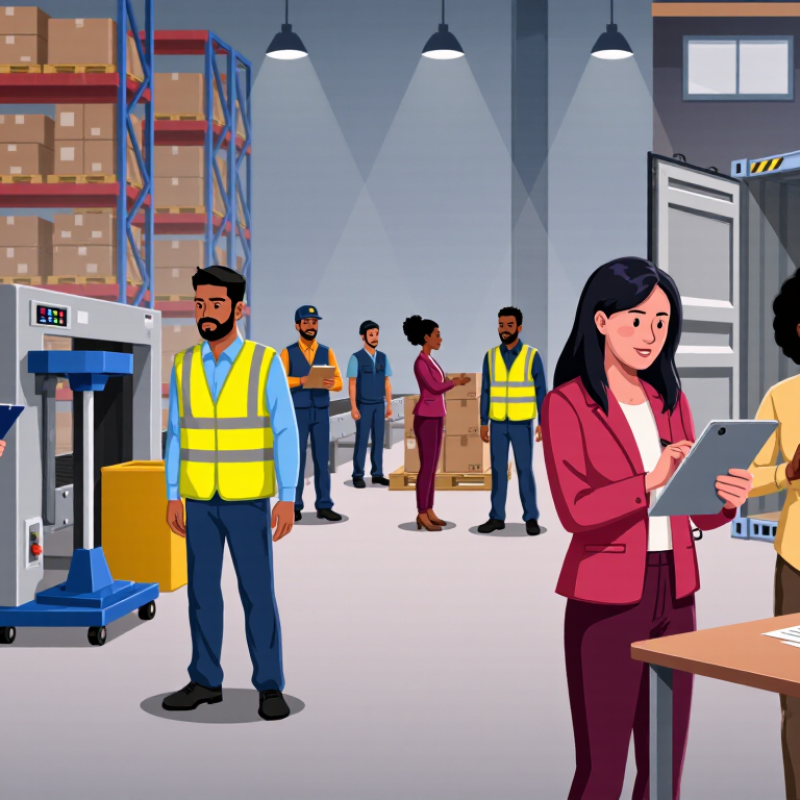
A supply chain audit is a structured, evidence-based review of how a supplier operates. It checks whether written policies match daily practice. Auditors examine contracts, worker interviews, training records, payroll data, permits, production controls, and shipment trails. They may visit factories, warehouses, farms, or service locations. The scope should follow risk, not convenience. A desktop review cannot reveal a blocked emergency exit. A site visit may miss falsified records. Both can matter.
A supply chain audit is not merely a quality inspection. It is not automatic proof of responsible performance. Auditors compare evidence with defined requirements, identify gaps, rate their severity, and assign corrective actions. Independent auditors should record sampling methods, interview limits, and unresolved uncertainty. According to the International Labour Organization and World Health Organization, 2.93 million workers died from work-related factors in 2019. That figure makes safety verification more than paperwork. Yet one audit remains a time-bound sample. Conditions can change the next morning.
The World Bank’s 2023 Logistics Performance Index covered 139 economies. It highlighted uneven reliability in customs, infrastructure, and shipment tracking. Auditors can connect those weaknesses to practical controls, including supplier mapping, lot records, temperature logs, access controls, and backup carriers. A recurring weakness is incomplete visibility beyond first-tier suppliers. Companies may audit a polished facility while missing subcontracted work. That assumption needs challenging. A credible audit leaves an evidence trail, protects interview confidentiality, and checks whether corrective action actually worked. Sometimes, it does not.
A supply chain audit is a systematic review of suppliers, processes, and working conditions to identify compliance, labor, environmental, and operational risks before they become costly disruptions.
Global forced-labour exposure highlights why audits matter: the International Labour Organization estimated that 27.6 million people were in forced labour in 2021. Audits, supported by worker interviews and corrective-action plans, can help companies identify and address high-risk conditions in their supply chains.
Source: International Labour Organization, Walk Free and International Organization for Migration, “Walk Free: Global Estimates of Modern Slavery,” 2022. Figures are global estimates and are not company-specific audit results.
A supply chain audit examines more than factory paperwork. It tests whether daily practices match stated policies. Labor conditions are a central area. Auditors review wages, working hours, recruitment fees, worker interviews, and grievance records. The International Labour Organization estimated 2.93 million work-related deaths worldwide in 2019. This figure shows why safety checks need evidence, not promises. An audit should also inspect fire exits, protective equipment, emergency drills, and accident investigations.
Environmental controls receive equal attention. Auditors examine energy use, emissions, wastewater, chemical storage, waste handling, and resource consumption. The United Nations Environment Programme reported that global resource extraction could rise by 60% by 2060 without major changes. Traceability is another test. Can a company identify the site, process, and material source behind one shipment? Governance reviews cover supplier approval, anti-bribery controls, data accuracy, and corrective-action records. Cybersecurity may also matter where digital purchasing systems connect multiple suppliers. Audits are useful, but they are not perfect. A short visit can miss night-shift risks or hidden subcontracting.
Tips: Use worker interviews away from supervisors. Compare payroll data with attendance records. Sample unexpected shipments. Track corrective actions with owners and deadlines. The OECD Due Diligence Guidance recommends risk-based, ongoing review rather than one-time checking. That approach is more realistic, although many audit programs still depend too heavily on documents. Credible findings need site observations, private conversations, dated evidence, and independent verification.
A supply chain audit matters because hidden weaknesses rarely appear in spreadsheets. It tests whether suppliers follow agreed standards, document key activities, and manage risks consistently. More importantly, it shows how work happens on the floor, not only how policies sound in meetings. The strongest audits begin with a clear scope. This scope may cover sourcing records, production controls, worker interviews, storage conditions, and delivery documents. Keep it practical.
Auditors review documents before visiting the site. They compare purchase orders, training logs, inspection records, and inventory counts. During the visit, they observe processes, speak privately with employees, and sample transactions from different dates. Photographs, signatures, timestamps, and physical counts can support the findings. Interviews should be respectful and confidential. A manager's confident answer is not enough. Evidence must connect to the requirement being tested. Auditors should also record limitations, such as restricted access, missing translations, or incomplete records. These details affect reliability.
Afterward, findings are rated by impact and supported with specific evidence. The supplier and buyer agree on corrective actions, owners, deadlines, and follow-up checks. A strong follow-up verifies results rather than accepting a written promise. No audit sees everything. Sampling can miss a recurring problem, and rushed interviews can distort the picture. That is why experienced teams revisit high-risk areas and adjust their methods. Audit quality improves when people question their own assumptions. The process is imperfect, but transparent records make improvement measurable.
| Audit Stage | Primary Objective | Typical Evidence Reviewed | Audit Methods | Key Deliverable | Typical Duration | Risk Coverage |
|---|---|---|---|---|---|---|
| 1. Scope and Planning | Define the products, facilities, suppliers, processes, standards, and reporting period covered by the audit. | Supplier list, contracts, purchase orders, risk assessments, previous audit reports, applicable laws, and customer requirements. | Document review, stakeholder interviews, risk-based sampling, and audit-plan development. | Approved audit scope, criteria, timetable, sampling plan, and auditor responsibilities. | 1–5 working days | High: unclear scope can leave major risks unaudited. |
| 2. Supplier Pre-Assessment | Identify higher-risk suppliers before conducting detailed on-site or remote verification. | Country and sector risk information, supplier questionnaires, certifications, incident records, workforce data, and environmental disclosures. | Risk scoring, questionnaire analysis, desk research, and comparison against minimum requirements. | Prioritized supplier register and escalation list. | 2–10 working days | High: helps focus resources on material risks and vulnerable operations. |
| 3. Document and Records Review | Test whether management systems and required controls are documented and operating consistently. | Policies, procedures, training records, payroll records, permits, maintenance logs, incident registers, and corrective-action records. | Traceability checks, record sampling, document authentication, and interviews with responsible personnel. | Verified control matrix and preliminary list of nonconformities. | 1–3 working days | Medium: identifies control gaps that may not be visible during a site visit. |
| 4. On-Site or Remote Audit | Verify actual practices against documented procedures, contractual requirements, and recognized audit criteria. | Production areas, warehouses, equipment, worker interviews, health and safety controls, waste handling, access controls, and inventory records. | Observation, interviews, physical inspection, sample testing, photographic evidence where permitted, and process walkthroughs. | Evidence-based findings classified by severity, cause, and affected process. | 1–5 working days per site | High: detects implementation failures, unsafe conditions, and process-level weaknesses. |
| 5. Traceability Testing | Confirm that materials, products, transactions, and responsible parties can be tracked through relevant supply-chain stages. | Batch or lot numbers, bills of materials, shipping records, receiving logs, certificates of origin, and inventory movements. | Backward tracing from finished goods and forward tracing from source records using selected samples. | Traceability test results, chain-of-custody gaps, and data-integrity findings. | 0.5–2 working days | High: supports recall readiness, responsible sourcing, and fraud detection. |
| 6. Finding Classification | Rank audit findings according to impact, likelihood, legal exposure, and recurrence potential. | Observed evidence, applicable requirements, incident history, control effectiveness, and management responses. | Root-cause analysis, severity grading, evidence validation, and management confirmation. | Finding register categorized as critical, major, minor, or observation according to defined criteria. | 0.5–2 working days | High: creates a consistent basis for remediation and escalation. |
| 7. Corrective Action Plan | Convert findings into measurable actions with owners, deadlines, resources, and verification methods. | Finding register, root-cause analysis, proposed controls, target dates, responsible managers, and supporting budgets. | Action-plan review, feasibility assessment, deadline setting, and approval by accountable management. | Corrective and preventive action plan with measurable completion criteria. | 2–10 working days | Medium: reduces recurrence when actions address root causes rather than symptoms. |
| 8. Final Audit Report | Communicate the audit conclusion, evidence, material risks, unresolved issues, and required next steps. | Audit notes, verified records, photographs where authorized, interview summaries, scoring results, and management responses. | Evidence reconciliation, quality review, report drafting, and auditee fact-checking. | Final report containing scope, methodology, findings, risk rating, conclusion, and recommendations. | 2–7 working days | Medium: supports governance, purchasing decisions, and transparent escalation. |
| 9. Follow-Up and Closure | Verify that corrective actions were implemented effectively and that residual risks are acceptable. | Updated procedures, training evidence, inspection results, new records, effectiveness metrics, and repeat-audit evidence. | Desk verification, targeted re-audit, sampling, interviews, and comparison with original findings. | Closure decision, residual-risk statement, or escalation for overdue and ineffective actions. | 30–180 days after the audit | High: confirms whether improvements are sustained in practice. |
| 10. Continuous Monitoring | Track changing supplier risk between formal audits and trigger timely intervention. | Incident reports, delivery and quality data, grievance records, regulatory notices, certification status, and supplier performance indicators. | Periodic reviews, automated alerts where available, trend analysis, supplier scorecards, and targeted assessments. | Updated risk profile, audit frequency decision, and escalation or improvement actions. | Monthly, quarterly, or event-driven | High: identifies emerging risks before they become major disruptions or violations. |
A supply chain audit gives a company a clearer view of how goods move from suppliers to customers. It examines records, production controls, delivery data, and working conditions. This evidence helps teams identify delays, repeated defects, hidden costs, and weak communication before they become larger problems. In practice, an auditor may compare purchase orders with warehouse receipts and inspect a sample of production records. Small mismatches can reveal larger process gaps.
One major benefit is improved supplier performance. Clear findings allow managers to set measurable targets for delivery accuracy, product quality, and corrective action. Audits also strengthen traceability. When a shipment has an issue, teams can locate its source faster and limit unnecessary disruption. Better data supports more realistic planning, especially when demand changes suddenly. It can also reduce waste by showing where materials, time, or storage space are being lost.
Audits support responsible business decisions as well. Interviews, site observations, and document reviews can reveal training needs or unsafe procedures. However, an audit is not a perfect picture. Sampling may miss an isolated failure, and polished records may hide daily difficulties. That risk deserves attention. Auditors should compare paperwork with physical evidence and employee experiences. Findings can feel uncomfortable, particularly when internal controls are involved. Yet honest criticism often creates the most useful improvement plan. Regular follow-up checks whether promised changes actually work, rather than allowing a report to sit unused.
Supply chain audits reveal whether suppliers follow agreed quality, labor, safety, and environmental controls. They also expose hidden weaknesses before those weaknesses disrupt production. In practice, auditors often face incomplete records, changing suppliers, and unclear responsibility. A factory may provide polished documents, yet daily procedures can differ. That gap matters. It can affect product consistency, delivery reliability, and stakeholder trust.
Data quality creates another serious challenge. Records may use different formats, languages, or measurement methods. Auditors must compare purchasing logs, inspection reports, training records, and shipment data. Limited site access can make verification harder, especially across distant locations. Time pressure may also encourage surface-level checks. That is risky. An audit can miss problems when interviews feel rushed or workers fear honest answers. Even experienced teams can overlook evidence. Their methods should remain open to review.
Tips: Define audit criteria before visiting each site. Request source documents early. Interview several roles privately, not only managers. Compare records with physical conditions, such as labeled storage areas and inspection stations. Use risk-based sampling for high-impact suppliers. Record evidence clearly, including dates and responsible personnel. Follow up on corrective actions with deadlines and proof. Do not treat a clean report as permanent assurance. Supply chains change, and audit plans must change with them.
It checks whether suppliers follow agreed quality, labor, safety, and environmental procedures. It also reveals weaknesses hidden behind polished reports. Daily work matters.
The scope may cover sourcing records, production controls, worker interviews, storage, and delivery documents. Keep the scope practical. Focus on higher-risk activities.
Auditors may compare purchase orders, training logs, inspection records, inventory counts, and shipment data. They check dates, signatures, quantities, and timestamps. Missing records reduce confidence.
They observe production steps, inspect storage areas, and compare physical counts with inventory records. They may check labeled shelves and inspection stations. Paperwork is not enough.
Auditors should speak privately with workers from different roles. Questions should be respectful and clear. A manager’s confident answer cannot replace employee evidence.
Incomplete records, language differences, restricted access, and limited time can weaken verification. Changing suppliers may also confuse responsibility. Small gaps matter.
Findings are rated by impact and supported with specific evidence. The supplier and buyer assign owners, deadlines, and follow-up checks. Written promises need proof.
No audit examines everything. Sampling may miss recurring problems, especially during short visits. Teams should revisit high-risk areas and question their assumptions. The process remains imperfect.
A Supply Chain Audit is a structured review of the processes, records, and relationships involved in sourcing, production, storage, and distribution. It examines areas such as supplier performance, purchasing procedures, inventory accuracy, quality controls, workplace practices, environmental management, documentation, and risk prevention. By assessing these areas, organizations can better understand how materials and products move through the supply chain and identify weaknesses that may affect efficiency, reliability, or accountability.
A typical audit begins with planning and defining its scope, followed by document reviews, interviews, data analysis, and on-site observations when appropriate. The findings are then evaluated against internal requirements and applicable standards, with corrective actions recommended where needed. Supply Chain Audit activities can improve transparency, reduce operational risks, strengthen supplier cooperation, control costs, and support continuous improvement. However, audits may be affected by incomplete records, limited access to facilities, inconsistent supplier practices, language or cultural differences, and insufficient time or resources. Careful preparation and clear communication help make the process more effective.
